 Highlight Of Package
offered features
Overviews
Overview
Tilicho Lake, standing at an elevation of 4,919 meters, is regarded as the highest lake in the world and remains one of the most awe-inspiring destinations in the Annapurna region. This adventurous trekking route branches off from the renowned Annapurna Circuit, leading trekkers from Manang to the stunning Tilicho Lake and then onward across the formidable Thorong La Pass at 5,416 meters.
More than just a natural wonder, Tilicho Lake holds deep religious and cultural significance. Nestled beneath the towering peaks of Tilicho, Nilgiri, Khangsar, and Muktinath, the lake is also referenced in the ancient Hindu epic, the Ramayan. Surrounded by towering snow-capped mountains, the pristine, turquoise lake provides a serene and mesmerizing experience for trekkers and photographers alike. In winter, when the lake is completely frozen, the landscape becomes even more magical, offering unforgettable memories.
The journey with Nepal Tibet Excursion begins from Besisahar, tracing the classic Annapurna Circuit route. Trekkers walk through lush paddy fields, alongside roaring rivers and cascading waterfalls, with breathtaking views of Manaslu and Himalchuli along the way. The trail gradually ascends to the picturesque village of Manang, home to the culturally rich Thakali people known for their unique traditions and warm hospitality.
From Manang, the trail diverges toward Tilicho Lake. Accommodation is available at Tilicho Base Camp, where trekkers rest before heading to the lake. After visiting Tilicho, the trek continues over the challenging yet rewarding Thorong La Pass, the highest point on the route. The descent leads through the sacred site of Muktinath and down to Jomsom, a scenic Himalayan town. From Jomsom, a short 30-minute flight takes you back to Pokhara.
For seasoned trekkers seeking an alternative path, the route from Tilicho Lake to Jomsom via Mesokanto La Pass can be considered. However, this trail is more demanding, with no tea houses or lodges along the way, and thus requires full camping gear and proper logistical support.
Route
The Thorong La Pass via Tilicho Lake Trek is a uniquely crafted itinerary that fills the missing piece in the classic Annapurna Circuit journey. Although it extends the traditional trek by just three additional days, it introduces a completely new dimension to the experience. This route takes trekkers on a detour from the main trail, heading toward the stunning Tilicho Lake before rejoining the Annapurna Circuit at Yak Kharka.
The trail branches off towards Khangsar village and continues to Tilicho Base Camp, eventually reaching one of the highest glacial lakes in the world—Tilicho Lake at 4,920 meters. With the majestic Tilicho Peak towering behind and its melting glaciers feeding the lake, this spot stands as the crown jewel of the journey.
Incorporating Tilicho Lake into the itinerary not only enhances the scenic and cultural value of the trek but also offers a natural advantage in terms of acclimatization. The challenging hike from Tilicho Base Camp to the lake involves a steep ascent of nearly 800 meters, providing ideal altitude training in preparation for the demanding Thorong La Pass—the highest and most strenuous point of the trek.
The trail to the lake is adorned with dramatic landscapes, cascading rivers, and narrow hillside paths. Particularly notable is the landslide-prone section before Tilicho Base Camp, which features stunning and otherworldly terrain. This portion of the trek, though remote and rugged, is an unforgettable highlight for those seeking both beauty and adventure in the high Himalayas.
Difficulty
The Tilicho Lake and Thorong La Pass trek demands a strong level of physical fitness and endurance. Trekkers should be prepared for long hiking days, typically ranging from 6 to 10 hours daily, which can be especially challenging at high altitudes. The route involves steep climbs and descents, rugged rocky trails, and the added strain of carrying personal gear, all of which contribute to the overall difficulty of the trek.
Accommodation
The Tilicho Thorong La trek is primarily a teahouse trek, with accommodation provided in simple local guesthouses along the route. Most rooms are twin-sharing with basic furnishings such as beds, mattresses, pillows, and occasionally blankets, while bathrooms and toilets are generally shared. Some teahouses, particularly in less remote areas, may offer rooms with attached bathrooms, though this is not common. Electricity, telephone, and internet services may be available at certain locations, often for an additional fee. Meals are provided at the teahouses, with both vegetarian and non-vegetarian options available. During peak trekking seasons, especially in places like Yak Kharka or Thorong Phedi, you may need to share a room with fellow trekkers. At Tilicho Base Camp, a relatively new guesthouse serves as the main accommodation, with the final approach to Tilicho Lake typically completed as a day hike from the base camp.
Meals
The Tilicho Thorong La Pass Trek is a popular and well-established route in the Annapurna region, attracting trekkers from around the world who seek adventure amidst dramatic landscapes and high-altitude wonders like Tilicho Lake and Thorong La Pass. Along the trail, local teahouses provide a wide selection of meals, offering both traditional Nepali and international dishes to suit different tastes. While you are free to choose from the menu, we highly recommend trying local Nepali cuisine for a more authentic cultural experience. Nepal Tibet Excursion also organizes this trek during the Christmas and New Year holidays, making it an ideal choice for those looking to celebrate the festive season with an unforgettable Himalayan adventure.
Permits
For the Tilicho Lake and Thorong La Pass trek in Nepal, two key permits are required: the Annapurna Conservation Area Permit (ACAP) and the Trekkers' Information Management System (TIMS) card. The ACAP is mandatory for all treks within the Annapurna region and costs NPR 3,000 (approximately $30 USD) for foreign nationals. It can be obtained in Kathmandu, Pokhara, or at designated entry points along the trail. The TIMS card, which helps manage and support trekkers' safety, costs around $20 USD and is available through trekking agencies or at official TIMS counters in Kathmandu and Pokhara.
If you plan to extend your trek into the restricted Upper Mustang region—separate from the main Annapurna Circuit—you’ll need an additional special permit. The Upper Mustang Restricted Area Permit costs $500 USD for the first 10 days, with an extra $50 USD charged for each additional day, and it must be arranged through an authorized trekking agency. Besides these permits, travelers must have a valid passport and a Nepal visa, which can be obtained on arrival at Kathmandu airport. Comprehensive travel insurance is strongly recommended, especially for high-altitude trekking, and should include coverage for emergency evacuation, medical treatment, and trip cancellations. All permits can be arranged by Nepal Tibet Excursion, which is a registered trekking agency.
Best Time
The best time for Tilicho Lake and Thorong La Pass trek is during the spring (March to May) and autumn (September to November) seasons. These months offer stable weather, clear skies, and comfortable temperatures, making them ideal for high-altitude trekking. In spring, the trails come alive with blooming rhododendrons and other wildflowers, adding vibrant color to the landscape. The temperatures are mild, and there's a lower chance of rain, allowing for uninterrupted trekking days and excellent views of the Annapurna and Dhaulagiri ranges.
Autumn is equally favorable, with crisp, cool weather and clear skies that offer some of the best mountain visibility of the year. Since the monsoon rains have just passed, the air is fresh and the trails are dry, enhancing both the beauty and the comfort of the journey. While trekking is possible during the winter (January–February) and monsoon (June–August) seasons, these periods are generally less suitable due to harsh conditions like extreme cold, snowfall, or muddy and slippery paths that can make the trek more difficult and less enjoyable.
Packing List
A well-prepared packing list is essential for a safe and comfortable Tilicho Lake and Thorong La Pass trek. Due to the high altitude and unpredictable weather, you’ll need sturdy gear and layered clothing to handle everything from warm days to freezing nights. Must-haves include durable trekking boots, warm insulating layers like thermals and a down jacket, weatherproof outerwear, trekking poles, and a sleeping bag suitable for sub-zero temperatures. Don’t forget essentials like a first-aid kit, sun protection, personal hygiene items, and a quality backpack to carry your gear efficiently.
Clothing Essentials:
Cost Include
Cost Exclude
Itinerary
Your adventure begins with an early morning drive from the bustling capital of Kathmandu to the hill town of Besisahar and onward to Jagat. The journey, though long and bumpy, offers a fantastic glimpse into Nepal’s shifting geography—from chaotic urban sprawl to serene mountain foothills. The landscapes change gradually, with terraced fields, flowing rivers, and scattered settlements welcoming you to the lush Marsyangdi River Valley. Jagat, a small village nestled along the trail, will be your first overnight stop and marks the start of the trek proper.
You begin your hike by descending through a scenic trail carved alongside the Marsyangdi River. Passing through tropical vegetation, cascading waterfalls, and Gurung villages, you’ll gain elevation gently while soaking in the rural atmosphere. The trail takes you across suspension bridges and through rugged terrain until you reach Dharapani, a village that marks the junction of several important trekking routes. The air grows crisper here, and you'll start to notice a change in both climate and culture.
From Dharapani, the trail climbs steadily into cooler regions. The forests become thicker with pine and fir, and the mountains begin to dominate the skyline. Today’s journey offers exceptional views of Lamjung Himal and Annapurna II. You’ll pass through villages like Timang and Koto, each with its own unique blend of Tibetan influence and rustic Himalayan charm. Eventually, you arrive in Chame, the administrative center of the Manang District, where modern amenities begin to thin out and the landscape feels increasingly remote.
Today’s trail winds through narrow canyons and along sheer cliffs before opening up to sweeping mountain vistas. As you ascend, the terrain grows drier and more rugged, offering a stark contrast to the lush greenery of the lower hills. By afternoon, you'll reach the village of Pisang, split into two sections: Lower Pisang and Upper Pisang. The upper settlement is more traditional and offers breathtaking views of the Annapurna range. Staying here allows for better acclimatization and a more culturally rich experience.
This day is both scenic and challenging. You’ll take the higher route through the ancient villages of Ghyaru and Ngawal, which sit perched dramatically above the valley. These detours offer spectacular panoramas of Annapurna II, IV, and Gangapurna. The route traverses dry alpine meadows, prayer flags, and ancient stone chortens. Eventually, the path descends into the wide, windswept valley that holds the village of Manang, a traditional Tibetan-Buddhist town and a key rest point on the circuit.
Today is a planned rest day in Manang to allow your body to adapt to the increasing altitude. But it's far from idle. You can take short hikes to nearby viewpoints such as Gangapurna Lake or the Bhojo Gumba, or even up to a viewpoint above the village for sweeping views of the Annapurna range. The thin air, stark beauty, and traditional Tibetan culture of Manang make it one of the most memorable spots on the trek.
Leaving Manang behind, the trail branches off from the main Annapurna Circuit and veers toward Tilicho Lake. The route climbs gradually as you pass through a dry, rocky landscape dotted with yak pastures and high-altitude flora. As you reach Siri Kharka, the air gets thinner and the views more dramatic. This peaceful little hamlet, often shrouded in mountain silence, serves as a great overnight spot before pushing higher.
Today’s walk is relatively short but crosses several landslide-prone sections. The trail is narrow and dramatic, hugging the steep cliffsides above the valley below. Your destination is Tilicho Base Camp, where trekkers gather before ascending to one of the world’s highest lakes. The night here is cold and quiet, and the anticipation for the following day makes it all the more exciting.
An early morning start takes you on a breathtaking climb up to Tilicho Lake, a sparkling glacial body of water nestled at nearly 5,000 meters. The hike is steep and challenging, but the reward is immense—icy turquoise waters surrounded by rugged peaks, under a dome of deep blue Himalayan sky. After spending time soaking in the atmosphere, you’ll descend the same route back to Siri Kharka for a well-earned rest.
You rejoin the main Annapurna trail by heading back toward Yak Kharka. The path descends before gradually climbing again through open alpine meadows, where herds of yaks often graze. The trail offers unobstructed views of snowy ridgelines, and you’ll feel the terrain preparing you for higher altitudes as the environment becomes increasingly sparse and stark.
Today’s journey leads to the foot of the formidable Thorong La Pass, one of the highest trekking passes in the world. The trail climbs steadily, offering glimpses of the snowy ridge you’ll cross tomorrow. Thorong Phedi is a rugged outpost clinging to the mountainside, where trekkers rest and gather strength before attempting the crossing. Some may choose to push a bit higher to High Camp for easier access the next day.
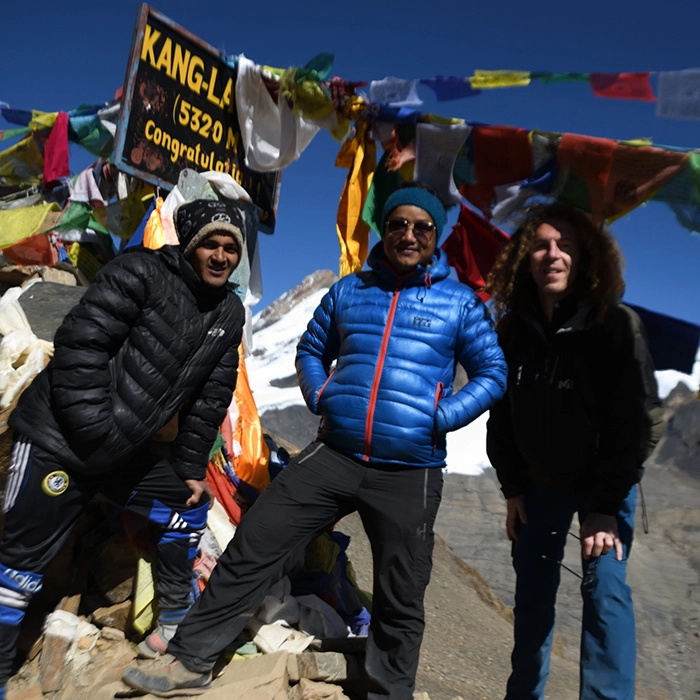
The big day. Setting off before dawn, you begin a steep and steady climb to Thorong La Pass, often blanketed in snow. The air is thin, and every step requires effort, but reaching the prayer flag-covered summit is a triumph. From here, you descend dramatically into the Mustang region, arriving in the sacred town of Muktinath, revered by both Buddhists and Hindus. It’s a spiritually rich and emotionally rewarding day.
Leaving Muktinath, you descend along the arid, windswept Kali Gandaki Valley. The trail passes through Jharkot and Kagbeni, ancient villages with distinct Tibetan character. Eventually, you reach Jomsom, a modern mountain town and the district headquarters of Mustang. The drastic change in landscape—from alpine slopes to dry, desert-like valleys—is fascinating.
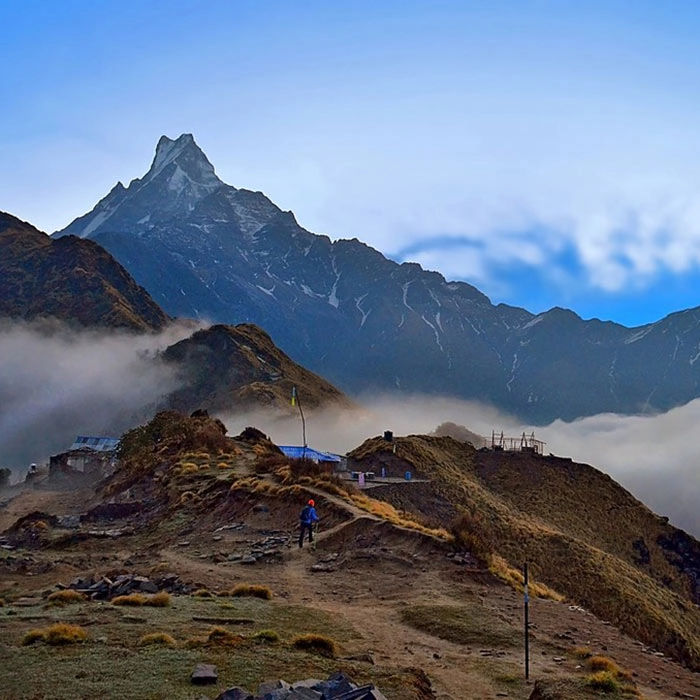
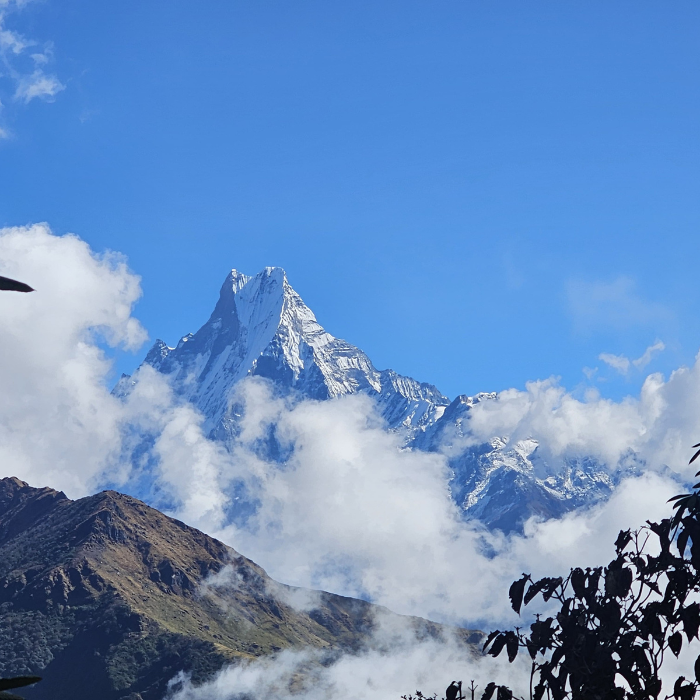
If weather permits, a short morning flight from Jomsom takes you to the beautiful lakeside city of Pokhara. The contrast is dramatic—suddenly you're in a lush, subtropical setting with warm air, vibrant cafés, and a calm lake reflecting Machapuchare’s sacred peak. The rest of the day is yours to relax or explore.
After breakfast, you board a tourist bus (or optionally a flight) back to Kathmandu. The journey along the Trishuli River offers a mix of hills, gorges, and glimpses of village life. Once back in the capital, you can settle into your hotel and enjoy a warm shower, a comfortable bed, and possibly a farewell dinner.
Depending on your plans, today marks either the end of your Himalayan journey or the beginning of another. Whether you’re flying home or heading off to explore more of Nepal, you leave with memories of mountain sunrises, remote trails, sacred lakes, and cultural connections that will stay with you for life.
Route Map For Tilicho Thorang La Trek
 Frequently Asked Questions
Group Join Discount
| Nos Of Persons | price per person |
|---|
Up Coming Fixed Departure
| Trip Name | Departure Date | Price | Trip Status | Action |
|---|
Package Reviews And Rating
Write Reviews
Enquiry For Further Information