 Highlight Of Package
offered features
Overviews
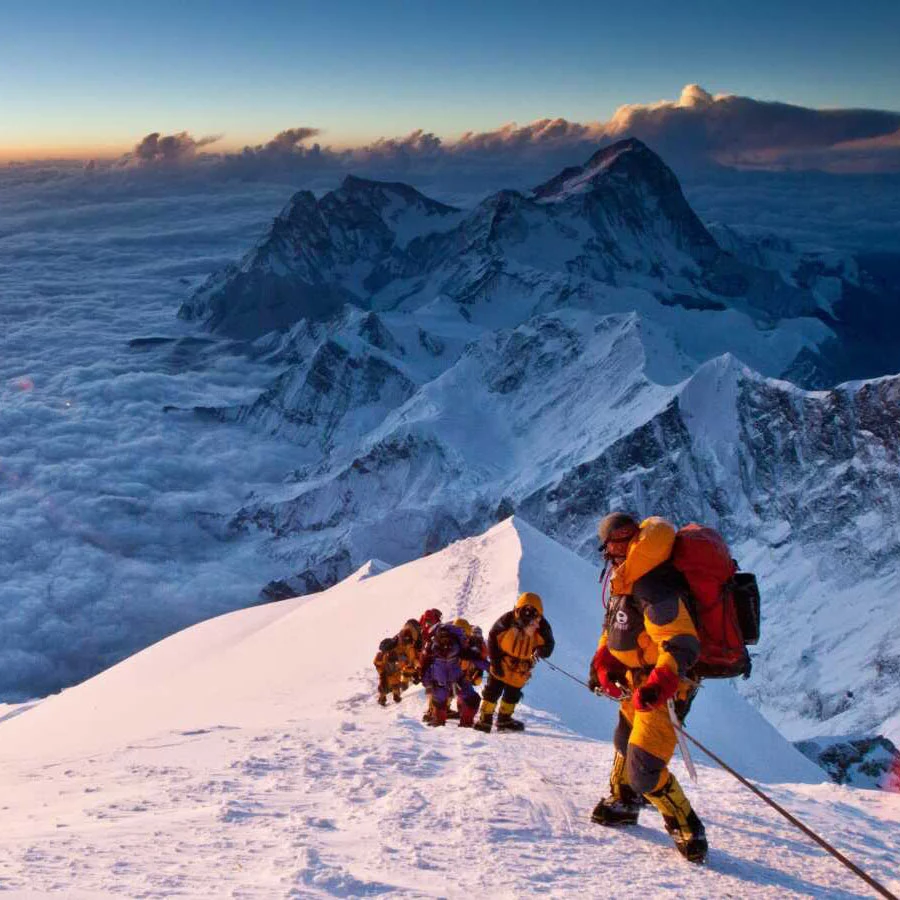
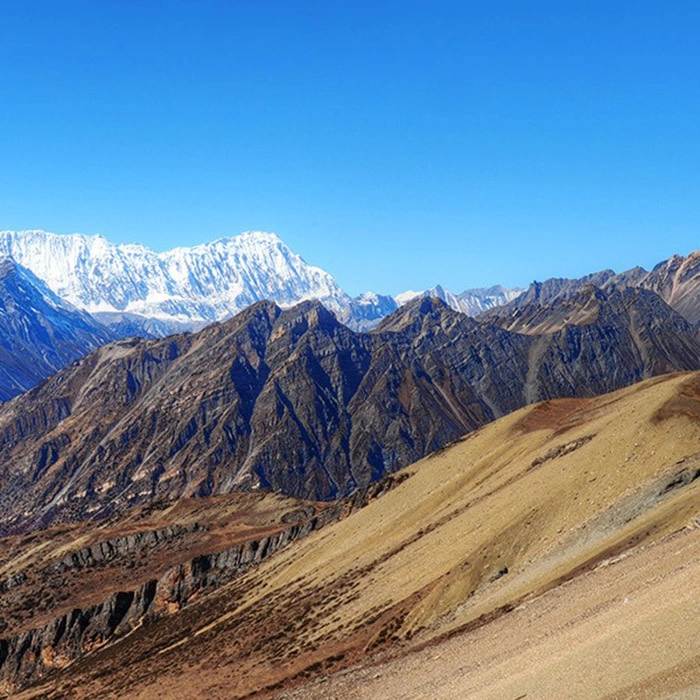
The Everest Three Pass Trek is an exhilarating and awe-inspiring adventure that offers a unique blend of challenge and natural beauty in the heart of the Himalayas. As you embark on this remarkable journey, you'll have the opportunity to conquer three iconic mountain passes: Kongma La, Cho La, and Renjo La. Each pass presents a distinct set of challenges, from steep ascents to breathtaking descents, making it a paradise for thrill-seeking trekkers and adventure enthusiasts.
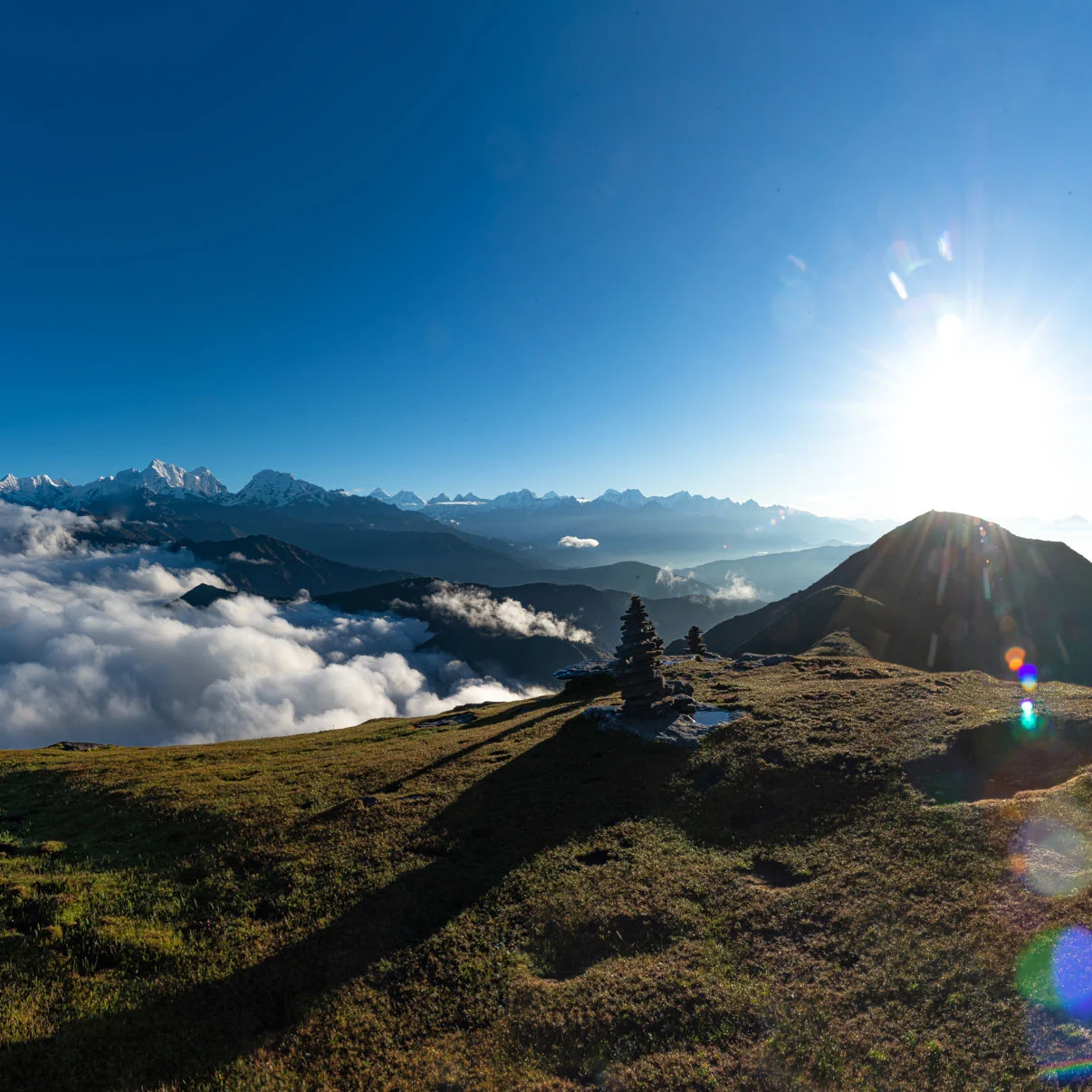
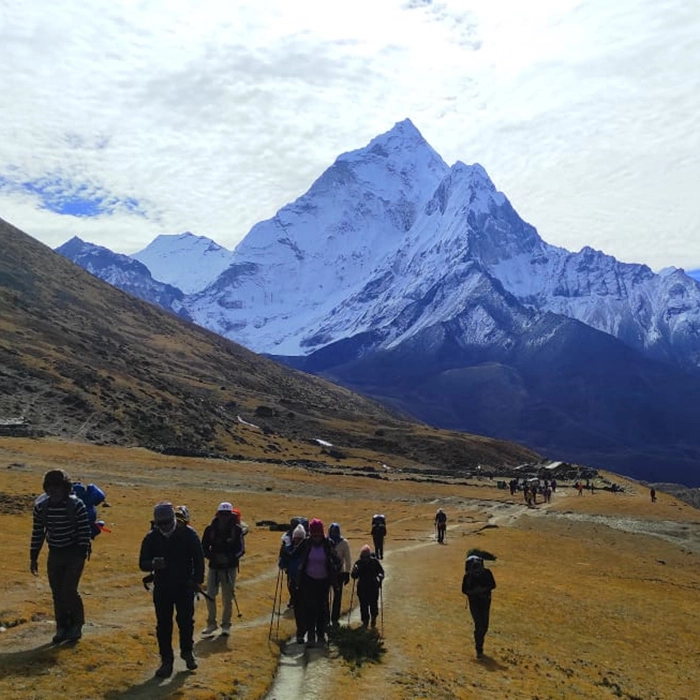
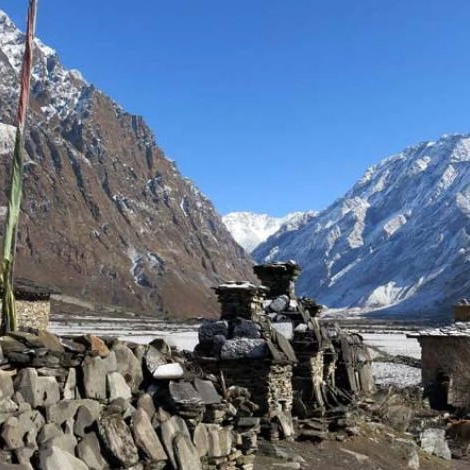
The trail weaves through picturesque Sherpa villages, offering glimpses into the rich local culture and warm hospitality. With the majestic Mount Everest as a constant backdrop, this trek guarantees breathtaking vistas that leave a lasting imprint on your memory.
Why Choose Nepal Tibet Excursion for the Everest Three Pass Trek?
At Nepal Tibet Excursion, we're dedicated to making your Everest Three Pass Trek a seamless and memorable experience. Here's how we can enhance your journey:
Seamless Airport Transfer: Enjoy the convenience of a private vehicle pick-up upon arrival at the airport, as well as drop-off at your hotel. Similarly, a smooth transfer will be arranged from your hotel to the airport upon departure.
Comprehensive Online Briefing: After confirming your booking, you'll receive an online trip briefing, ensuring you're well-prepared with all necessary information before your journey begins.
Health Monitoring at Altitude: Your safety is our priority. We regularly monitor your blood oxygen saturation using pulse oximeters at high altitudes. This proactive approach helps us detect early signs of altitude sickness, ensuring your well-being throughout the trek.
Medical Preparedness: We provide medical kits as a precautionary measure, demonstrating our commitment to your health and safety during the trek.
Effortless Booking and Reservation: Our user-friendly booking and reservation system streamlines the process, making it hassle-free for you to secure your trekking adventure.
Open Communication Channels: Stay connected through multiple channels including Email, WhatsApp, Facebook, WeChat, Viber, Skype, and Zoom. This enables easy communication and assistance whenever you need it.
Convenient Payment Options: We offer an easy and flexible payment system, accommodating your preferences and making the financial aspect of your trek straightforward.
Gear Arrangements: If you don't have your own sleeping bags and down jackets, we'll provide them for you, ensuring you're well-equipped to handle varying temperatures.
Luggage Solutions: Enjoy the convenience of our free excess luggage storing service during the trek, allowing you to trek with only essentials while keeping your additional belongings safe.
Porter Support: We provide duffle bags for porters, enhancing their ease of carrying and safeguarding your belongings during the trek.
When to Trek with Nepal Tibet Excursion?
The best time to embark on the Everest Three Pass Trek with Nepal Tibet Excursion is during the spring (March to May) or autumn (September to November). These seasons offer clear skies, favorable weather, and stunning views while avoiding the extremes of the monsoon and winter.
As you journey through the rugged landscapes, conquer legendary mountain passes, and immerse yourself in the rich culture of the Himalayas, Nepal Tibet Excursion ensures your safety, comfort, and an unforgettable adventure. Let us be your trusted partner in exploring the grandeur of the Everest region, where nature's magnificence and human resilience culminate in an extraordinary journey.
Embarking on the Everest Three Pass Trek with Nepal Tibet Excursion is a decision to embrace the grandeur of the Himalayas while prioritizing safety and an immersive experience. Our team is dedicated to ensuring that your journey is as seamless and memorable as possible.
How to Prepare for the Everest Three Pass Trek with Nepal Tibet Excursion?
Physical Fitness Preparation: The Everest Three Pass Trek is a physically demanding adventure. In preparation, engage in a comprehensive fitness routine that includes cardiovascular exercises, strength training, and endurance-building activities. Focus on hiking or walking uphill to simulate the trek's conditions.
Obtain Permits and Necessary Documents: Nepal Tibet Excursion will assist you in obtaining the required permits for the trek, including the Sagarmatha National Park Entry Permit and the Khumbu Rural Municipality Permit. You'll also need a TIMS (Trekkers' Information Management System) card. We'll guide you on obtaining a valid passport, visa, and trekking insurance.
Choose the Right Season: The ideal time for the Everest Three Pass Trek is during the spring (March to May) or autumn (September to November). These months offer clear skies, favorable weather, and stunning views. Nepal Tibet Excursion will help you plan your trek during the best season for your adventure.
Pack Smart: Our expert guides will advise you on packing lightweight clothing suitable for layering, as temperatures can vary greatly. Don't forget essential gear like trekking boots, a down jacket, rain gear, a warm hat, gloves, and a comfortable backpack. Carry a water purification system, as safe drinking water is crucial.
Acclimatization: Altitude sickness is a serious concern during the trek. Nepal Tibet Excursion will help you plan your itinerary to include rest days and gradual altitude gain to allow your body to acclimatize. Listen to your body, and if you experience symptoms like headaches, dizziness, or nausea, descend to a lower altitude.
Guided vs. Independent Trek: Decide whether to trek with a guided group or independently. Nepal Tibet Excursion offers both options. While trekking independently offers more flexibility, joining a guided group ensures safety, experienced guides, and pre-arranged logistics.
Route Planning: The Everest Three Pass Trek typically starts and ends in Lukla. Nepal Tibet Excursion will provide you with a detailed itinerary and guide you through the route, including the locations of teahouses, water sources, and high-altitude camps. The passes include Kongma La, Cho La, and Renjo La; be prepared for steep ascents and descents.
Hydration and Nutrition: Our experienced team will guide you on staying hydrated by drinking plenty of fluids and avoiding alcohol at high altitudes. We'll advise you on consuming a balanced diet with carbohydrates for energy and protein for muscle recovery. Local tea houses offer a variety of meals, but we'll help you consider carrying energy bars and snacks.
Respect Local Culture: The Everest region is home to Sherpa communities with a rich cultural heritage. Nepal Tibet Excursion emphasizes the importance of respecting local customs, traditions, and religious sites. We encourage you to learn a few basic Nepali phrases to interact with locals and show appreciation for their hospitality.
Emergency Preparedness: Carry a basic first aid kit with essentials like bandages, antiseptics, pain relievers, and altitude sickness medication. Nepal Tibet Excursion will familiarize you with emergency evacuation procedures and ensure you have a means of communication in case of emergencies.
The Everest Three Pass Trek with Nepal Tibet Excursion is a journey of a lifetime, offering challenges, natural beauty, and cultural immersion. As you conquer these legendary mountain passes and immerse yourself in the Himalayan way of life, you can trust our experienced team to ensure your trek is effective, safe, and unforgettable.
The Best Season to Embark on the Everest Three Pass Trek with Nepal Tibet Excursion
The best season to go on the Everest Three Pass Trek with Nepal Tibet Excursion is in the spring (March to May) or autumn (September to November). These seasons offer the most favorable weather conditions, with clear skies, mild temperatures, and little rainfall. The trails are also less crowded during these times of year.
Spring: The spring season is a great time to go on the Everest Three Pass Trek with Nepal Tibet Excursion because the weather is starting to warm up, and the flowers are in bloom. You'll also be able to see the snow-capped mountains in their full glory. However, the spring season is also the busiest time of year for trekking in Nepal, so expect to share the trails with more people.
Autumn: The autumn season is a bit cooler than the spring season, but it's still a great time to go on the Everest Three Pass Trek with Nepal Tibet Excursion. The weather is still clear and sunny, and the crowds have thinned out a bit. You'll also be able to see the fall foliage in the surrounding mountains.
If you're looking for the best possible weather conditions for the Everest Three Pass Trek with Nepal Tibet Excursion, then the spring or autumn seasons are the way to go. However, it's important to note that the weather in the Himalayas can be unpredictable, so it's always a good idea to be prepared for anything
Cost Include
Cost Exclude
Itinerary
Your incredible Everest Three Pass Trek begins as you land in the vibrant capital city of Kathmandu. Upon arrival, you'll be greeted and transferred to your comfortable hotel. Take some time to relax and explore the bustling streets of Thamel, a hub for trekkers. In the evening, meet your trekking guide for a briefing on the adventure ahead. Enjoy a delicious Nepali dinner and rest well to start your journey fresh the next day.
An early morning flight whisks you away to Lukla, where your Everest adventure truly begins. The thrilling flight offers breathtaking views of the Himalayan peaks before landing at Tenzing-Hillary Airport, one of the world's most challenging airports. After a brief stop, your trek to Phakding commences, following the Dudh Koshi River through picturesque villages and lush forests. Tonight, you'll stay in a cozy teahouse, surrounded by the tranquil sounds of the river.
Today's journey takes you to Namche Bazaar, the gateway to the Everest region. You'll cross suspension bridges and ascend gradually along the Everest Trail. As you reach Namche Bazaar, the bustling market town nestled in a natural amphitheater, you'll be greeted by stunning mountain vistas. Spend the evening exploring the local shops and savoring your first taste of high-altitude cuisine in a teahouse.
Acclimatization is crucial for your safety in high-altitude trekking, so today is a well-deserved rest day. You can take short hikes to nearby attractions, such as the Everest View Hotel, where you'll enjoy breathtaking views of Mount Everest and the surrounding peaks. Explore the vibrant Sherpa culture and visit the local museums to learn about the history and traditions of the region. Rest and hydrate to prepare for the upcoming days of trekking.
Leaving Namche Bazaar, you'll continue your ascent into the Himalayas, heading towards Tengboche. The trail takes you through rhododendron forests, and as you reach Tengboche, you'll be greeted by the mesmerizing view of the Ama Dablam peak. Tengboche is famous for its picturesque monastery, one of the largest in the region. Spend the evening in the tranquil ambiance of the teahouse while soaking in the spiritual atmosphere.
Today, your trek leads you to Dingboche, a village surrounded by stunning mountain views. The trail gradually gains altitude, and you'll notice the landscape becoming more rugged as you venture deeper into the Everest region. Dingboche offers breathtaking vistas of Lhotse, Island Peak, and Ama Dablam. Enjoy your evening in the teahouse, acclimatizing to the increasing altitude and preparing for the days ahead.
Another essential acclimatization day awaits you in Dingboche. You have the option to embark on short hikes to nearby hills, like Nangkartshang Peak, for breathtaking panoramic views of the surrounding peaks. It's an opportunity to adjust to the altitude and ensure your safety as you progress to even higher elevations in the coming days. Take in the serene beauty of Dingboche and prepare for the challenging sections of the trek.
Only a two to three hour trek separates Dingboche from Chhukung, although the distance feels longer because to the reduced oxygen levels at such an altitude. Your body will adjust to being at such a high height with the help of this little walk. Overnight stay at Chukkung in a tea house.
A very early morning breakfast and a packed lunch are required before beginning the steep, short trek that goes to Kongma La (5,535m). We finally arrived at the Kongma La, our highest pass at 5,546 meters, a few hours later. To reach the summit of the Pass, which offers a breathtaking view of the mountains and Glacier Lake, glacier, it takes about 3 to 4 hours. Following a steep descent, it takes another three to four hours to pass the Khumbu Glacier and arrive in Lobuche. We will spend the night here in a tea house.
Today, the trail continues its occasionally hard ascent close to the Khumbu Glacier. Most of the time, our route involves shaky loose rock and windy conditions, but it also offers stunning view of mountains like Mt. Pumori (7,165 m), Lingtren (6,749 m), Khumbutse (6,665 m), Nuptse (7,861m), etc. It takes 3 to 4 hours of strenuous uphill walking to reach Gorak Shep (5,140m), the highest teahouse in the world. We are going to Mount Everest Base Camp to observe the Khumbu Icefall after lunch. From Base Camp, we will walk for two to three hours along the Glacier Ridge and frequently cross the glacier and get back to Gorakshep for overnight
We start the climb very early in the morning with a cup of hot tea or some soup in order to see the sunrise from the top of the Kalapatthar. The trail climbs steeply for 20 minutes as it follows the north ridge of Gorek Shep. To reach Kalapathar (5,550m), where a banquet of peaks awaits you there with a 360-degree panorama, it takes between one and two hours of steep ascent. The view from Kalapatthar is breathtaking and includes the view of highest mountains in the world, including Mt. Everest (8,848m), Lingtren (6,695m), Khumbutse (6,623m), Changtse (7,550m), Nupse (7879m), etc. After spending some time on the Kalapatthar Summit, we will hike for 4 to 5 hours to the Gorakshep and then down to the Dzongla (4,830m).
Even though we have left Everest in the past, the sights today are breathtaking. The sixth-highest mountain in the world, Mt. Cho Oyu (8,153m), is still visible, though. The climb to Cho La Pass involves a tough struggle up rock boulders and a walk across the glacier that is gradually sloping and coated with snow. After that, we make our way down the steep, boulder-strewn slopes to the Gokyo Valley, home to enormous glaciers and turquoise lakes. We finally go to the peak on a slight incline. From here, a steep river valley is followed all the way down to its foot, where we spend the night at Tangnak (4,700m).
After early breakfast, the trek takes us through Nagjumpa Glacier, the largest glacier in the Nepal Himalayas, before ascending a path that connects to Gokyo's main route. Beautiful lakes may be seen here, and Siberian ducks can be seen swimming over the still, mirror-like surface. You can reach the town in front of the third Lake (Dudh Pokharai) in Gokyo in 2 to 3 hours via the trek from Thangnak. You can rest at the hotel for the remainder of the day or hike up to Gokyo Peak (5,350m) to explore. This journey offers an once-in-a-lifetime chance to explore the area and take in the stunning, remote Himalayan scenery. Stay here overnight in a tea house.
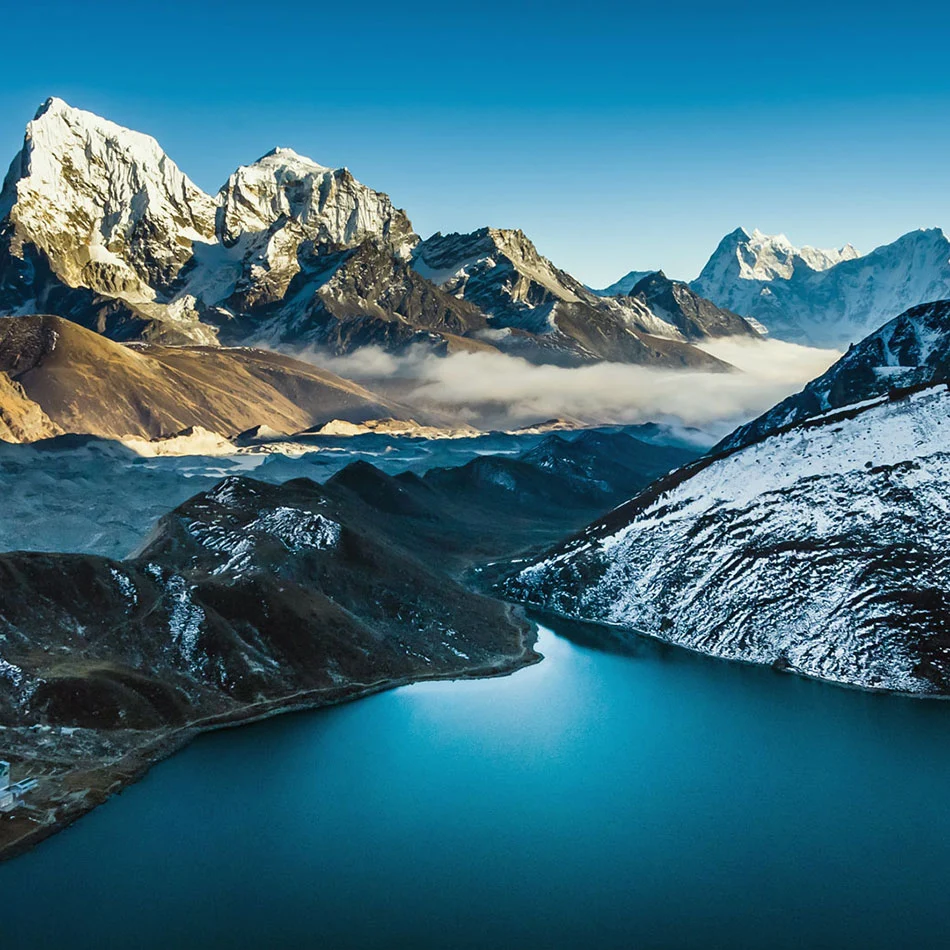
This is a day of relaxation and exploration in the stunning Gokyo Valley. We will climb up the difficult trail in the early morning for around two hours to reach Gokyo Ri (5,360m). From the summit of the Gokyo Ri, you will enjoy beautiful view of a sunrise on the top of the mountain transforming into golden color. From the summit, one can see the four tallest mountains in the world, including Mount Everest (8,848 meters), Cho-Oyu (8,153 meters), Lhotse (8,516 meters), and Makalu (8,463 meters), among many more. Enjoy this memories and the view from the summit of the Gokyo Ri forever. We'll spend the night in the tea house.
The main day of the hike over the Renjo La is today (5,360m). After breakfast, you set out early in the morning and climb into a wide curie heading for the ridge line in front of you. This is the final difficult crossing we will encounter, and when we cross it, we are treated by an amazing view of the valley. On the western shore of Gokyo, you descend over glacial slabs and moraine to reach Lungden. Stay at tea house in Lungden.
The main day of the hike over the Renjo La is today (5,360m). After breakfast, you set out early in the morning and climb into a wide curie heading for the ridge line in front of you. This is the final difficult crossing we will encounter, and when we cross it, we are treated by an amazing view of the valley. On the western shore of Gokyo, you descend over glacial slabs and moraine to reach Lungden. Stay at tea house in Lungden.
We are approaching Nangpa Valley from below. The majority of mountain heroes call Thame their home. Tenzing Norgay Sherpa, the first person to summit Everest, was born there and shared the top of the world with Edmund Hillary, a New Zealander, on May 29, 1953. We are spending the night at the tea house.
After breakfast, the hikes take us through juniper and rhododendron forests, through remote Sherpa settlements like Thamte, Mende, Thamo, and Phurte, before gradually descending along the Bhote Koshi River Bank and turning south down the valley until Namche Bazaar. Once more, we trek for an hour and a half to the Manjo, retracing our steps. The remainder of the day is spent in Manjo, where the ambience is wonderful. Overnight stay at tea house.
After a long walk we'll have long last trek back to Lukla today. We descend along the Dudh Koshi River Bank crossing several bridges. After one and half-hours sine walk from Monju we get in Phakding Village, where we stopped for overnight last time. We will confirm our ticket to Kathmandu and enjoy rest of the day with beautiful view.
We will fly back to Kathmandu according to our time and now your Everest Base Camp Trek ends here with all the happy memories that lasts forever
We will escort you to the airport for your departure. If you are staying longer in Nepal, we will wish you a great continued stay – and can arrange your next adventure too!
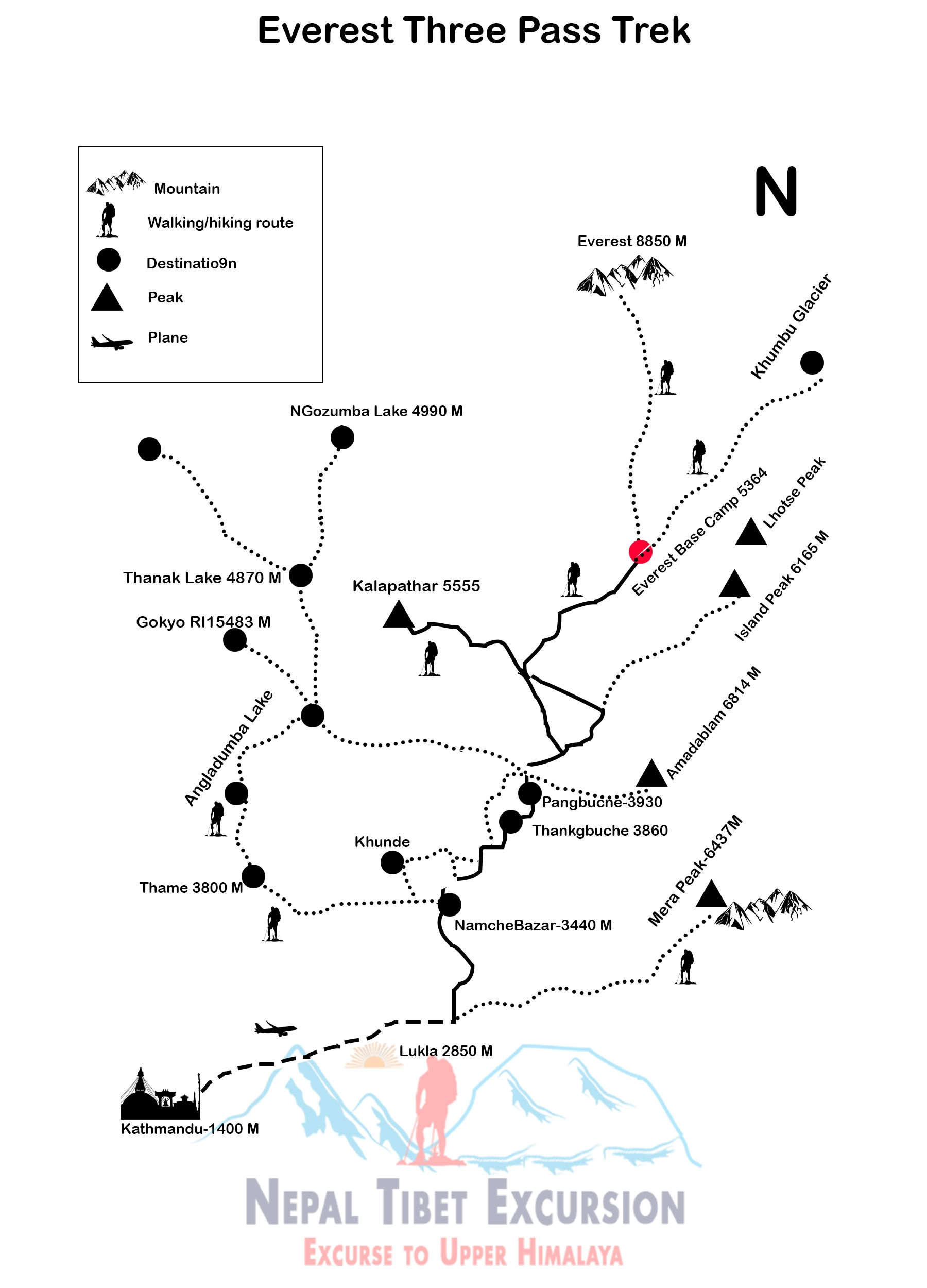
Route Map For Everest Three pass Trek 20 Days
 Frequently Asked Questions
Group Join Discount
| Nos Of Persons | price per person |
|---|---|
| 1 persons | US$ 2150 |
| 2 persons | US$ 2042 |
| 3-5 persons | US$ 1999 |
| 6-9 persons | US$ 1935 |
| 10-15 persons | US$ 1892 |
| 16+ persons | US$ 1827 |
Up Coming Fixed Departure
| Trip Name | Departure Date | Price | Trip Status | Action |
|---|
Package Reviews And Rating
"The Everest Three Passes Trek is not just a trek; it's a transformative odyssey through the heart of the world's most iconic mountain range. This journey, which I recently had the privilege to undertake, is a testament to nature's grandeur, the indomitable human spirit, and the sheer magnificence of the Himalayas. Here's my heartfelt review of the Everest Three Passes Trek"

"The Everest Three Passes Trek is not just a trek; it's a transformative odyssey through the heart of the world's most iconic mountain range. This journey, which I recently had the privilege to undertake, is a testament to nature's grandeur, the indomitable human spirit, and the sheer magnificence of the Himalayas. Here's my heartfelt review of the Everest Three Passes Trek"
Write Reviews
Enquiry For Further Information