 Highlight Of Package
offered features
Overviews
Mera Peak Climbing – Nepal’s Highest Trekking Peak
Mera Peak Climbing is a thrilling adventure in the Everest region, offering a challenging yet rewarding experience. Standing tall at 6,476 meters, Mera Peak is recognized as Nepal’s highest trekking peak. Nestled within the Barun National Park, this majestic summit sits south of the iconic Mount Everest in the Solukhumbu region.
The journey to Mera Peak takes you through diverse landscapes, from lush green forests to rugged, barren terrain. While the route to the summit is generally non-technical, certain sections—particularly just below the summit—require fixed ropes and some technical gear. The final steep ascent involves traversing the snow dome using an ascender (jumar) on a fixed rope. Aside from this, most parts of the climb are considered moderate, making it suitable for fit adventurers, even those with limited technical climbing experience.
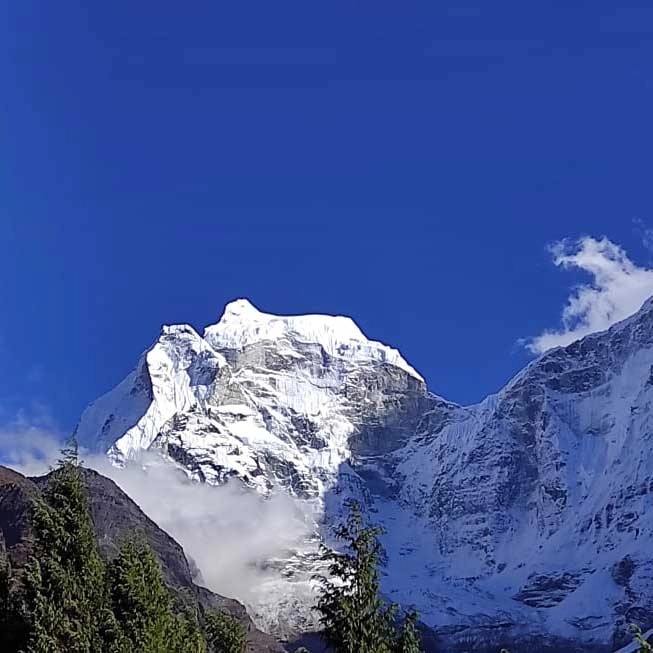
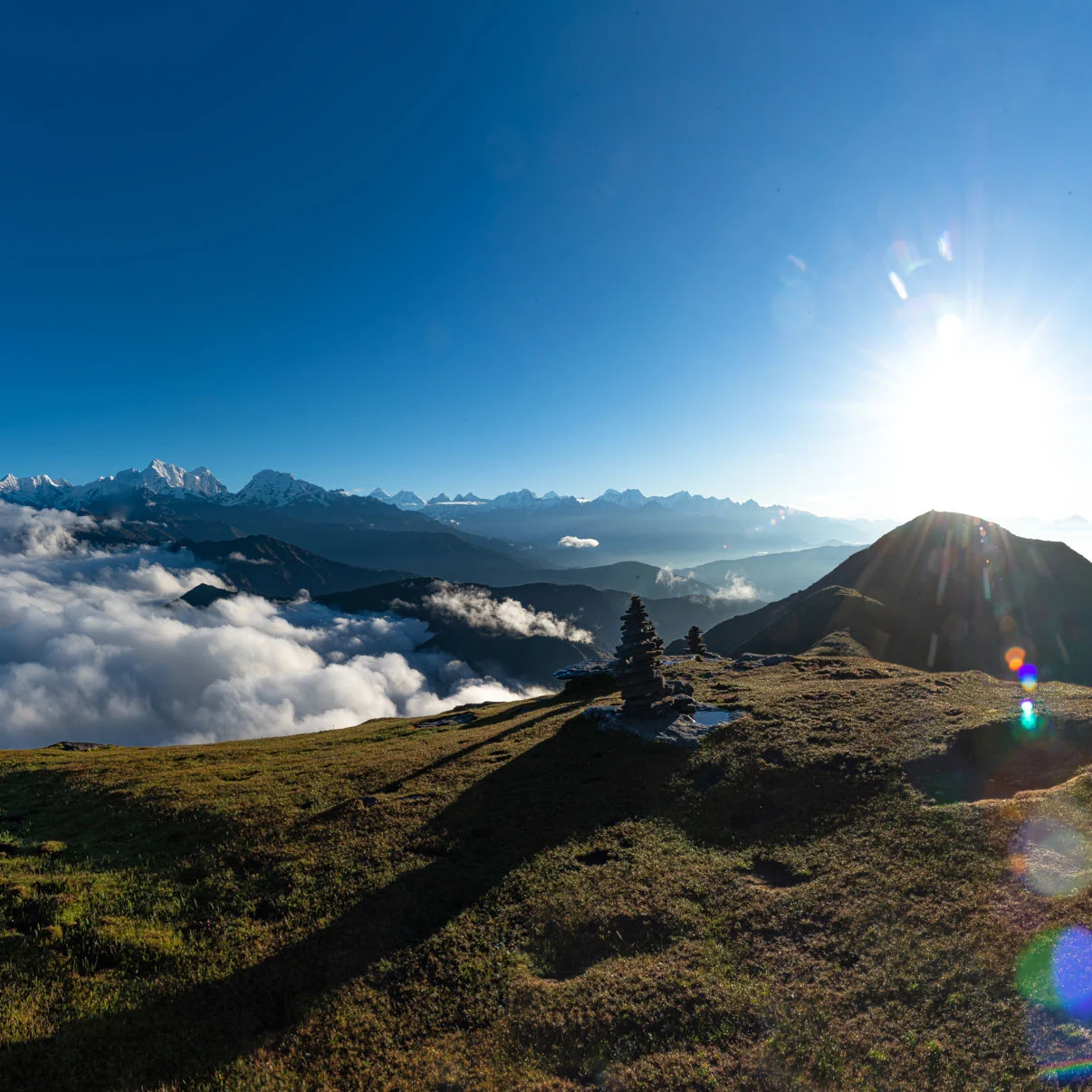
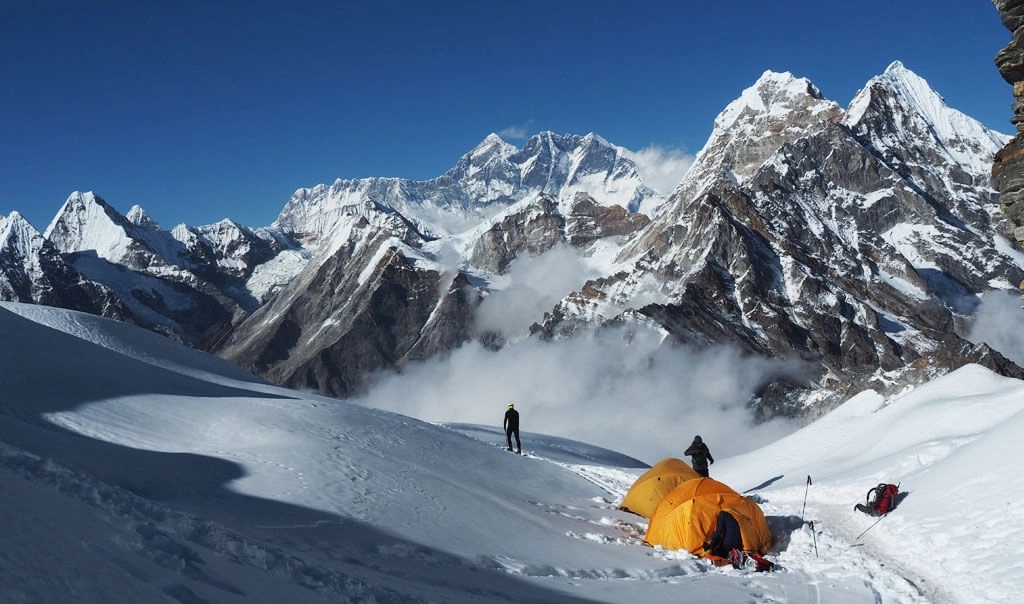
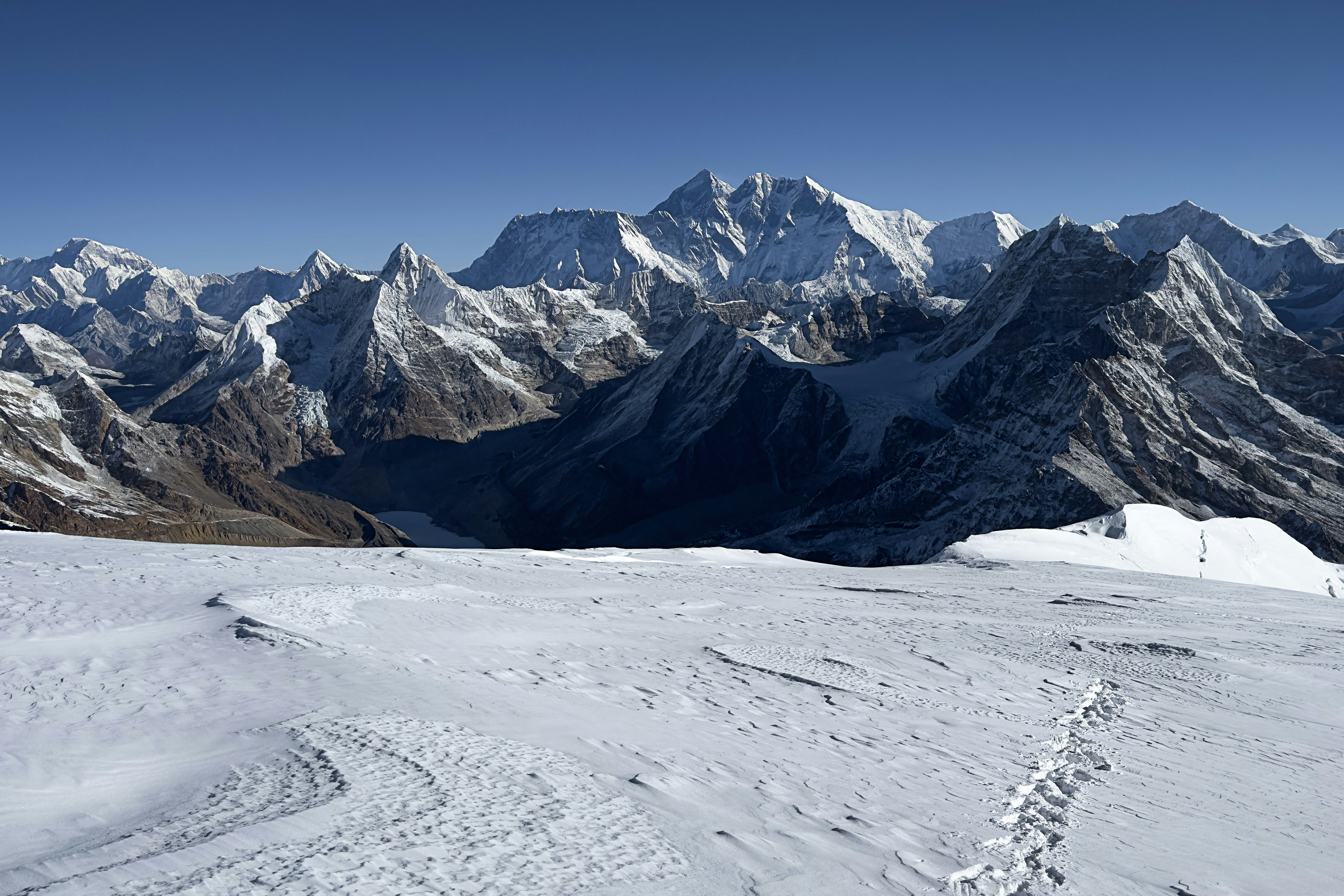
Mera Peak is famed for its spectacular summit views, offering an awe-inspiring panorama of the Everest region. From the top, climbers are treated to an unparalleled sight of three of the world’s tallest peaks: Mount Everest (8,848.86 m), Lhotse (8,516 m), and Cho Oyu (8,201 m). In addition, an array of smaller peaks surrounds Mera, making the experience even more memorable.
Out of Nepal’s 1,310 peaks, around 300 are in the Everest region, offering an endless spectacle for climbers. This part of the Himalayas has been a mountaineering paradise for over seven decades. As you ascend Mera Peak, you’ll truly appreciate the grandeur of these towering giants.
Mera Peak, with its imposing height and stunning surroundings, has long been a favorite among climbers. Although it presents a significant challenge, it is considered a beginner-friendly trekking peak by the Nepal Mountaineering Association, provided you have good physical fitness. Its allure lies in being both accessible to novice climbers and adventurous enough for those seeking a high-altitude thrill.
Mera Peak's mountaineering legacy dates back to 20th May 1953, when a French team led by Jean Franco became the first to reach its summit. Since then, Mera has attracted countless climbers, drawn by its beauty and the sense of accomplishment it offers. The mountain features three distinct summits: Mera North (6,476 m), Mera Central (6,461 m), and Mera South (6,064 m). Climbers typically aim for Mera North, the highest point.
Mera Peak Climbing Training
While Mera Peak doesn’t require extensive technical skills, learning to use climbing gear is essential. Nepal Tibet Excursion offers basic mountaineering training during your acclimatization day at Khare. Here, your climbing guide will teach you how to use equipment like ascenders, crampons, and ice axes. You’ll also learn about high-altitude safety, the use of ropes, and essential dos and don’ts for the climb.
Route to Mera Peak
Your journey starts with a 35-minute flight from Kathmandu to Lukla. From Lukla, you’ll begin trekking towards Paiya, following the classic Mera Peak route. The trail gradually ascends through Chuthanga (3,020 m), dense alpine forests, and then over the Zatrwa La Pass (4,610 m). This pass marks the border of Makalu Barun National Park.
After crossing Zatrwa La, you’ll descend to Thuli Kharka, a remote settlement, and continue through rocky terrain towards Tashing Dingma (4,010 m). The route then meets the Inkhu River at Tashing Ongma, which flows from Mera Peak and eventually merges with the Dudh Koshi River.
The trail takes you through Mosom Kharka and Gondishung, leading to Kothe (4,182 m). As you trek, you’ll occasionally catch glimpses of Mera Peak in the distance. The final stretch to the summit involves glacier travel and increasingly steep snow slopes.
Key overnight stops include Paiya, Pangkoma, Nigmsa, Chetrakhola, Kothe, Tangnang, Khare, Mera Base Camp, and Mera High Camp.
Mera Peak Trekking Distance
The round-trip distance of the Mera Peak trek is approximately 127 kilometers (79 miles). The journey begins at Lukla and winds through the highlands of the Everest region, eventually circling back to Lukla. The 21-day expedition covers a variety of terrains, from forests to glaciers, making the trek both challenging and rewarding.
Although Mera Peak is considered a non-technical climb, the long distances, high altitude, and mixed terrain—including rocky paths, glacial moraines, and snow slopes—make it a demanding adventure. It’s a perfect introduction to high-altitude mountaineering in the Everest region.
Best Time for Mera Peak 21-Day Climbing
The Himalayan seasons in Nepal favor climbing primarily in Spring (March to May) and Autumn (September to November). These windows offer stable weather and ideal conditions for mountaineering. Unlike trekking, peak climbing requires solid, stable snow and ice conditions, which are typically found in these seasons—making them the best times for Mera Peak.
Spring, running from March to May, is a popular time for climbers heading to Mera Peak. Clear skies, moderate temperatures, and stable climbing conditions draw many adventurers during this period. Similarly, autumn (from early September to late November) is another excellent time for the climb. The weather is crisp, dry, and perfect for high-altitude expeditions, with stunning views and less risk of snowstorms or rain.
In contrast, summer (June to August) and winter (December to February) are not suitable for Mera Peak. The summer months bring the monsoon, turning trails slippery, increasing the risk of landslides, and making climbing dangerous. Winter, on the other hand, brings extreme cold and heavy snowfall, creating icy, unstable terrain and dropping temperatures in the Everest region to harsh, subzero levels. Both seasons make the Mera climb unsafe and impractical.
Challenges of Climbing Mera Peak
Climbing Mera Peak is a challenging and rewarding Himalayan adventure. While it’s one of Nepal’s most accessible trekking peaks, it still presents unique challenges—especially for first-time climbers in the high Himalayas.
Physical Fitness
A good level of fitness is essential for this expedition. You’ll need endurance for trekking 5 to 7 hours a day over varied and rugged terrain for more than two weeks. The high-altitude environment adds another layer of difficulty, so it’s crucial to prepare your body and mind. Cardiovascular training, strength workouts, and long hikes are highly recommended in the months leading up to the climb.
Equipment
Nepal Tibet Excursion provides the technical climbing gear required for the Mera Peak expedition. If you inform us in advance, we can arrange the necessary climbing equipment at our store in Khare, available for rent at a small daily charge. However, climbers must bring their personal gear, including down jackets, hats, gloves, waterproof boots, and sunglasses.
Before the summit push, our experienced guides will conduct a training session to familiarize you with the essential climbing equipment—ice axe, crampons, ropes, harnesses, and ascenders. We want you to feel confident and safe when you’re out on the mountain.
Why Climb Mera Peak with Nepal Tibet Excursion?
Nepal Tibet Excursion has a highly experienced team of mountain guides and support staff dedicated to making your Mera Peak expedition safe, enjoyable, and unforgettable. With over 5 years of expertise in Himalayan expeditions, we have a deep understanding of the region’s mountains, weather, and terrain.
We prioritize safety above all. Our itineraries are designed to allow proper acclimatization, and our teams carry essential medical supplies and are trained in first aid. In case of emergencies, we have a reliable helicopter evacuation system in place.
Our small group approach ensures personal attention, with a maximum of 15 climbers per group. This creates a better guide-to-climber ratio, minimizes environmental impact, and avoids congestion on the mountain. We practice Leave No Trace principles and contribute to the local economy by sourcing services and supplies from the communities we pass through.
Mera Peak Climbing Guides
Nepal Tibet Excursion’s climbing guides are experienced professionals with extensive knowledge of Mera Peak and other Himalayan summits. They know the routes, techniques, and challenges inside out and will lead you safely every step of the way. Beyond technical skills, our guides are also motivators, problem-solvers, and leaders who understand the nuances of high-altitude expeditions and the importance of clear communication.
Accommodation on the Mera Peak Expedition
The accommodation during the Mera Peak trip varies depending on the location:
Permits Required for Mera Peak Climbing
To climb Mera Peak, you’ll need the following permits:
Nepal Tibet Excursion handles all the necessary paperwork and permit processes for you, so you can focus on your climb without worrying about bureaucratic hassles.
Mera Peak Itinerary
Nepal Tibet Excursion offers an 21-day Mera Peak climbing package. The adventure begins with a scenic flight from Kathmandu to Lukla, followed by a trek through remote villages and high-altitude landscapes. You’ll reach the summit of Mera Peak on the 14th day of the trek. The itinerary also includes your arrival and departure days, a sightseeing day in Kathmandu, and time for acclimatization and training.
However, the itinerary is flexible, and we can tailor the program based on your preferences and experience.
Mera Peak, with its imposing height and stunning surroundings, has long been a favorite among climbers. Although it presents a significant challenge, it is considered a beginner-friendly trekking peak by the Nepal Mountaineering Association, provided you have good physical fitness. Its allure lies in being both accessible to novice climbers and adventurous enough for those seeking a high-altitude thrill.
Cost Include
Cost Exclude
Itinerary
Upon arrival at Tribhuvan International Airport, our representative will warmly welcome you and assist with your transfer to the hotel in Kathmandu. After checking in, you’ll have time to rest and recover from your journey. In the evening, enjoy a welcome dinner at a traditional Nepali restaurant, where you’ll get to savor local cuisine and experience an enchanting cultural performance. This evening provides the perfect opportunity to meet fellow trekkers and your expedition guide, who will brief you about the upcoming adventure. Prepare to immerse yourself in the culture and landscapes of Nepal in the days ahead.
After breakfast, we’ll set off for a full-day guided sightseeing tour of Kathmandu’s vibrant UNESCO World Heritage Sites. The tour starts at Kathmandu Durbar Square, where intricate palaces, temples, and courtyards tell stories of Nepal’s royal history. We then visit the Swayambhunath Stupa, also known as the Monkey Temple, which offers panoramic views of the valley. Next, we explore the sacred Pashupatinath Temple, a major Hindu pilgrimage site along the Bagmati River. Finally, we end the day at the awe-inspiring Boudhanath Stupa, the largest in Nepal. After this cultural immersion, we return to the hotel for a relaxing evening.
An early morning transfer takes us to the domestic airport for a scenic mountain flight to Lukla, the gateway to the Everest region. As the small aircraft soars above the Himalayas, breathtaking views of towering peaks, deep valleys, and terraced hillsides unfold. Landing at Lukla’s dramatic airstrip is an adventure in itself. After meeting the local trekking crew and porters, we settle into a lodge, enjoy a warm meal, and rest. The fresh mountain air fills our lungs as we mentally prepare for the exciting trek ahead. The evening is spent acclimatizing and soaking in the mountain atmosphere.
Today, we begin our trek, leaving Lukla behind and ascending gradually through lush forests of rhododendron and pine. The trail climbs steadily, revealing glimpses of the distant snow-capped peaks. We pass small settlements and terraced fields, where locals tend to their crops and livestock. As we approach Chuthanga, the landscape becomes more rugged, with moss-covered rocks and towering trees lining the path. Chuthanga, our campsite for the night, is a serene alpine meadow surrounded by forested ridges. After a warm meal, we rest and acclimatize, listening to the sounds of the wilderness that envelops us.
Today is an important day for acclimatization, allowing our bodies to adjust to the rising altitude and preparing us for the challenges ahead. After breakfast, we take a short hike to a higher elevation, following the principle of “climb high, sleep low.” The trail offers stunning views of the surrounding hills, dense forests, and distant peaks. We may encounter yaks grazing in the pastures and spot colorful Himalayan birds. After the hike, we return to Chuthanga for lunch and spend the afternoon resting, reading, or enjoying the peaceful surroundings. Staying active while taking it easy helps our bodies adapt.
We begin the day with a gradual ascent through rhododendron forests, eventually reaching the rocky ridges that lead to Zatrwa La Pass (4600m). The climb is steep but rewarding, with spectacular views of the Himalayan range. Upon crossing the pass, the landscape changes dramatically, revealing open alpine meadows and distant peaks, including the mesmerizing Mera Peak. The trail descends slightly, leading us to Thuli Kharka, a beautiful grazing pasture surrounded by high cliffs and ridges. We set up camp or stay in a simple lodge, enjoying the quiet wilderness and the stunning starry sky in the evening.
After breakfast, we descend along a winding trail through dense forests of rhododendron, pine, and moss-draped trees. The path is steep in sections but offers stunning vistas of cascading waterfalls, wildflowers, and the distant peaks of the Hinku Valley. The air is fresh and crisp as we descend further into the valley, eventually reaching the settlement of Kothe, located beside the Hinku River. Kothe is a small, welcoming village where we’ll enjoy a hearty meal and some rest. The sound of the river and the serenity of the valley create a peaceful atmosphere for the night.
Today’s journey takes us deeper into the Hinku Valley as we follow the banks of the Hinku Khola River. The trail ascends gradually, offering stunning views of surrounding peaks like Kusum Kanguru and Mera Peak itself. We pass through yak pastures and small herder huts, feeling the air grow thinner as we gain altitude. Along the way, we may encounter local shepherds and traders, adding a cultural touch to the natural beauty of the landscape. We reach Thaknak, a seasonal grazing settlement nestled beneath towering cliffs. After lunch, we relax and take in the beauty of this high-altitude haven.
Acclimatization is vital at this elevation, so we take a rest day at Thaknak. After breakfast, we embark on a short acclimatization hike, possibly up to a nearby ridge offering panoramic views of the surrounding glaciers and towering peaks like Mera Peak and Charpate Himal. The trail may be rocky, but the reward is an unforgettable Himalayan panorama. We return to Thaknak for lunch and spend the afternoon resting, reading, or exploring the nearby landscape. This extra day at altitude allows our bodies to adapt, reducing the risk of altitude sickness as we prepare for higher climbs ahead.
Today, we continue our gradual ascent through a barren, glacial landscape. The trail follows the lateral moraine of the Dig Glacier, offering awe-inspiring views of the Hinku Nup and Shar glaciers. The path becomes steeper, but the scenery is breathtaking—an amphitheater of towering peaks surrounds us. We cross small streams and rocky sections, finally arriving at Khare, the base camp area for Mera Peak. Khare is a small settlement with teahouses and lodges nestled in the shadow of Mera Peak’s massive glaciers. After a hearty meal, we rest and mentally prepare for the final push toward the summit.
Today is a crucial acclimatization day at Khare. After breakfast, we’ll do a short hike to higher altitudes, possibly ascending to a nearby ridge for spectacular views of Mera Peak’s north face and the surrounding glaciers. The climb helps our bodies adjust to the thinning air while offering a chance to practice walking with crampons and other mountaineering techniques. In the afternoon, our climbing guide will brief us on the technical aspects of the Mera Peak climb, including rope work, ice axe use, and crampon techniques. We’ll enjoy an early dinner, rest well, and prepare for the climb ahead.
Today’s trek to Mera Base Camp is a short but challenging ascent over a rocky and icy trail. We carefully make our way, using basic climbing gear as needed. Upon arrival at Base Camp, we set up camp and enjoy a warm meal. In the afternoon, our climbing guide will provide hands-on training on essential techniques like using fixed ropes, proper pacing, and safety measures. If weather permits, there’s an optional hike to Mera La Pass (5600m) for breathtaking views of Everest, Lhotse, and Makalu. We then return to Base Camp or Khare for the night, feeling well-prepared for the climb.
Today, we leave Khare behind and begin the final push toward Mera High Camp. The trail is demanding, traversing glaciers, crevasses, and steep snow slopes. As we gain elevation, the air becomes thinner, and every step requires focus and determination. High Camp sits on a rocky outcrop with incredible views of the world’s tallest peaks, including Everest, Makalu, and Cho Oyu. We set up camp, rest, and hydrate while enjoying the surreal beauty of the Himalayan landscape. An early dinner is served as we prepare for the summit push, resting in our tents beneath a blanket of stars.
Today is the highlight of the expedition: our summit day! We begin before dawn, equipped with headlamps, crampons, and ice axes, making our way steadily up the glacier. The climb is long and challenging but technically straightforward. As we ascend, the first rays of the sun illuminate the Himalayan giants—Everest, Lhotse, Makalu, and Kanchenjunga stand tall in the distance, a breathtaking reward for our efforts. The final push to the summit of Mera Peak (6461m) is steep but exhilarating. We celebrate briefly at the top, taking in the 360-degree panorama before carefully descending all the way back to Khare for a well-deserved rest.
This contingency day is built into the itinerary in case of bad weather, delays, or altitude-related issues. If all goes according to plan and we have already summited, we use this day for rest, relaxation, or an optional hike around Khare. It’s an excellent opportunity to reflect on the incredible achievement of reaching the summit, share stories with fellow climbers, or simply soak in the peaceful mountain surroundings. If the summit attempt was delayed, this extra day provides a critical buffer to ensure a safe and successful climb. Our guides prioritize safety and make the best use of this day as needed.
After a hearty breakfast, we begin our descent back down the valley. The trail retraces our steps along the Hinku River, with a steady downhill gradient that feels refreshing after the challenging summit. The return journey offers a different perspective, with lush forests, rocky ridges, and cascading streams accompanying us along the way. We pass through yak pastures and herder settlements, taking breaks to soak in the views. The air grows warmer and denser as we descend, and we feel a renewed sense of energy. We reach Kothe by evening, where a warm meal and cozy lodge welcome us back.
Leaving Kothe behind, we begin the uphill trek toward Thuli Kharka. The trail climbs steadily through rhododendron and pine forests, offering glimpses of the high peaks and the valleys below. The air feels fresher, and the vegetation more abundant compared to the barren highlands we left behind. As we ascend, we cross several ridges, with occasional glimpses of distant snow-covered peaks and fluttering prayer flags. The peacefulness of the landscape invites moments of reflection on the incredible journey we’ve undertaken. After a fulfilling day, we settle in at Thuli Kharka, sharing stories and laughs with the team over dinner.
Today marks the final day of trekking as we make our way back to Lukla. We begin with a steep ascent to Zatrwa La Pass (4600m), where the prayer flags flutter in the breeze, marking the highest point of the day. The views are breathtaking, offering a final look at the surrounding peaks before we descend into the lush, green landscape below. The trail winds through rhododendron forests, past small streams, and terraced fields, eventually leading us to the bustling village of Lukla. After checking into the lodge, we celebrate our successful journey with the team, enjoying a hearty meal and perhaps a toast to the mountains.
After an early breakfast, we take a thrilling flight from Lukla back to Kathmandu, once again soaking in aerial views of the Himalayas. Upon arrival in Kathmandu, we transfer to the hotel, where a comfortable room and warm shower await. The afternoon is free for rest and relaxation—perhaps treat yourself to a massage, café visit, or some souvenir shopping in Thamel. After the challenges of the trek, it’s a day to unwind, recharge, and reflect on the unforgettable experience of Mera Peak. The evening is yours to enjoy at your leisure in Nepal’s bustling capital city.
Today, we explore the rich cultural heritage of the Kathmandu Valley, starting with Bhaktapur Durbar Square, a medieval city famous for its intricately carved wooden temples, courtyards, and traditional pottery. We wander through winding alleys, witnessing artisans at work and sampling local delicacies like Juju Dhau (king curd). Next, we visit Patan Durbar Square, known for its stunning Newar architecture, ancient courtyards, and sacred temples. After a day immersed in culture and history, we return to Kathmandu for a special farewell dinner, celebrating the journey with Nepali cuisine and warm memories shared with fellow climbers and guides.
Today, after breakfast, we bid farewell to Nepal, the Himalayas, and the incredible memories we’ve created on this journey. Our team will assist with your transfer to Tribhuvan International Airport for your departure flight. As you board the plane, you’ll carry with you not just photographs but the spirit of adventure, the resilience forged on the trails, and the profound connection with the mountains and their people. Thank you for trekking with us—until we meet again for another Himalayan adventure, safe travels and Namaste!
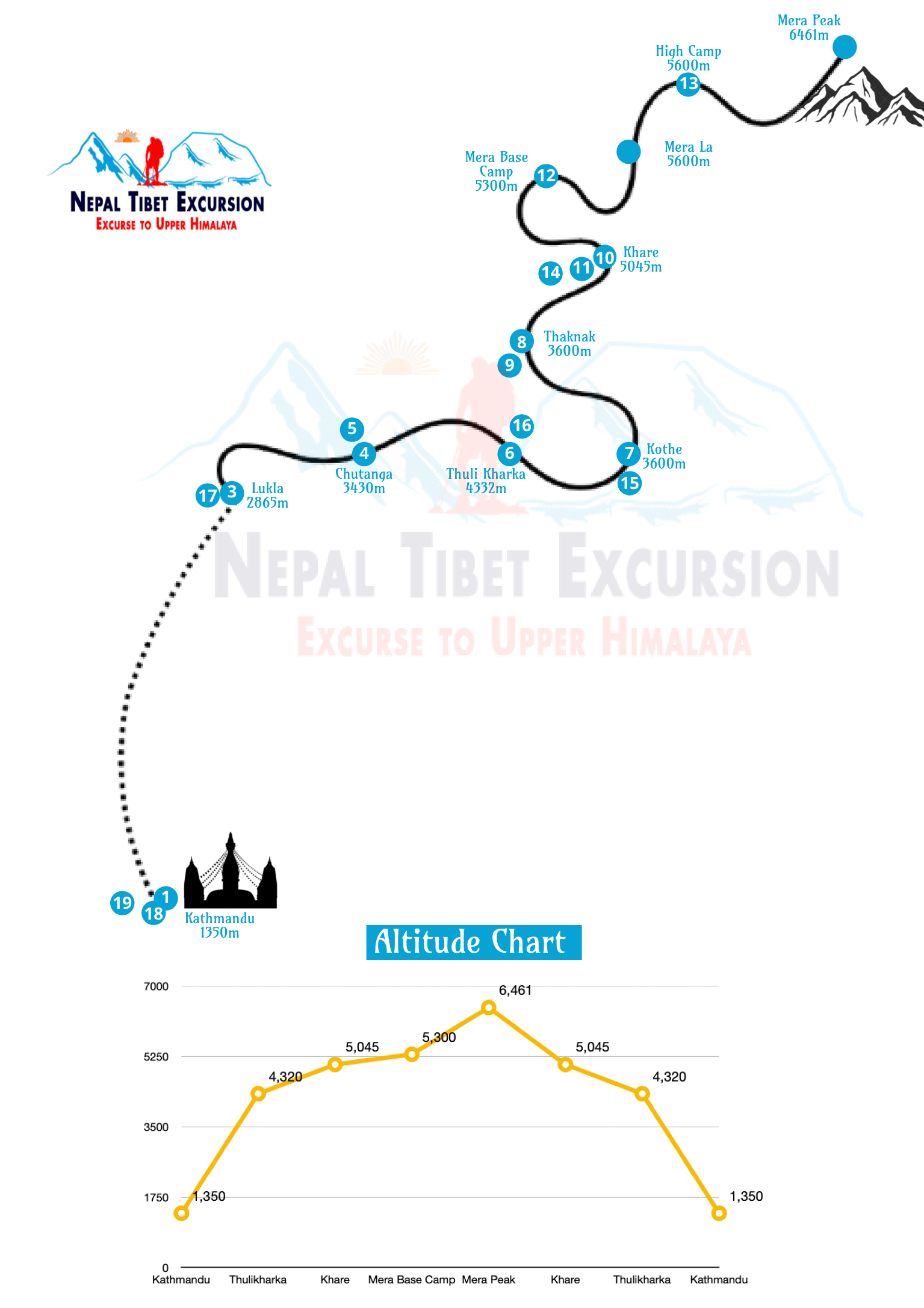
Route Map For Mera Peak Climbing
 Frequently Asked Questions
Group Join Discount
| Nos Of Persons | price per person |
|---|
Up Coming Fixed Departure
| Trip Name | Departure Date | Price | Trip Status | Action |
|---|
Package Reviews And Rating
Write Reviews
Enquiry For Further Information